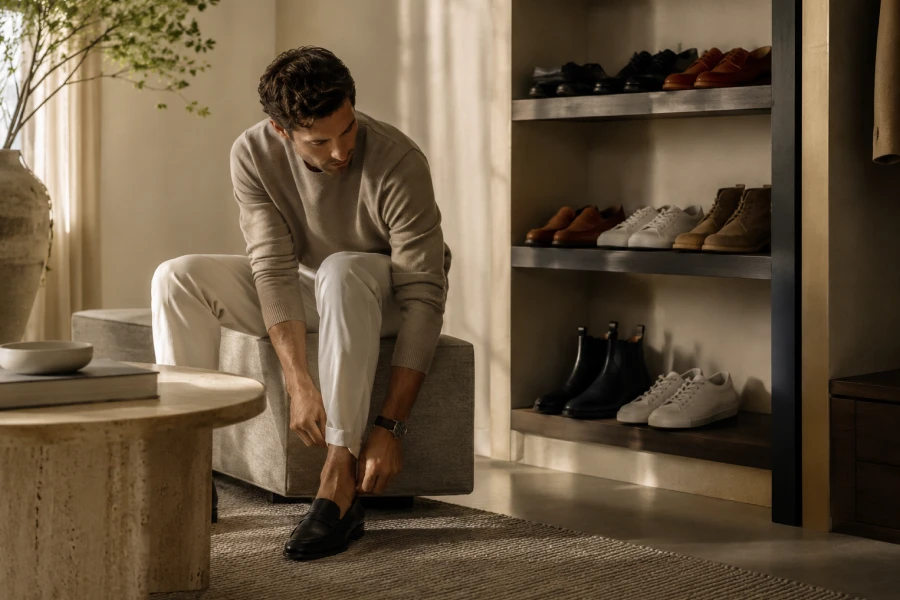
A well-planned shoe collection does not need to be large to feel useful. A year-round shoe wardrobe is built around flexibility, comfort, and silhouettes that make sense across changing weather. Instead of buying new footwear every season, you can choose a smaller group that serves multiple roles. The best pieces feel relevant with different fabrics, hemlines, and outerwear layers. They also reflect your real routine, whether that includes walking, commuting, travel, or office days. A thoughtful collection reduces clutter while expanding outfit possibilities. It makes getting dressed faster because your strongest options are easy to recognize. You begin to see shoes as repeatable wardrobe tools rather than isolated purchases. That shift can make style feel calmer and more sustainable. Most importantly, it encourages you to invest in choices that keep working long after their first wear.
Morning routines improve when your shoes already have clear roles. You know which pair works with relaxed denim, which pair sharpens tailoring, and which pair handles damp weather. That certainty saves time without making your outfits predictable. Strong shoe color coordination gives each pair more range because the footwear connects naturally with your closet’s core tones. A neutral does not have to mean only black or beige. Deep brown, soft gray, navy, burgundy, and muted metallics can all behave like useful wardrobe neutrals. Choose colors that appear elsewhere in your bags, outerwear, or everyday clothing. This creates repetition that looks intentional rather than restrictive. With fewer mismatched choices, even simple outfits begin to feel more polished. The collection becomes easier to use because every piece belongs to the same visual story.
Your lifestyle should determine the structure of your collection before fashion preferences fill in the details. Someone who walks daily needs different priorities than someone who drives everywhere. An office wardrobe may require polished options that still support long commutes. A creative routine may call for more texture, color, or expressive shape. A versatile shoe collection usually includes several dependable categories rather than endless variations of one style. Think in terms of sleek sneakers, loafers or flats, boots, warm-weather shoes, and an elevated option. Each category should solve a different styling problem. This framework keeps your purchases focused without making your wardrobe feel limited. It also reveals when you are buying duplicates rather than filling a real gap. Clear roles create a collection that works harder with less effort.
Travel often exposes the weaknesses in a shoe collection. You suddenly need comfort, walkability, weather flexibility, and enough polish for several different settings. Planning for those needs improves your everyday wardrobe as well. Good travel shoe planning begins with pairs that work with multiple outfit formulas. A clean sneaker may suit airport layers, casual dinners, and daytime exploring. A low-profile boot can handle cooler destinations while still looking sharp with dresses or trousers. Avoid shoes that require special clothing to make sense. Instead, choose pairs that can adapt to the clothes you already pack most often. This creates lighter luggage and fewer styling compromises. It also helps you identify which shoes deserve a permanent place at home. The best travel options are usually the same pieces that perform well in everyday life.
Weather changes quickly, and your footwear should be ready for that reality. The most useful collection includes options that protect you without feeling disconnected from your style. Think about rain, temperature swings, slippery sidewalks, heat, and unexpected walking. Reliable shoes make these conditions easier to manage. Seasonal maintenance also matters because it protects the pieces you use repeatedly. Simple shoe care by season can keep leather, suede, canvas, and delicate materials looking better for longer. Store warm-weather shoes clean and dry before colder months arrive. Refresh protective treatments before wet weather begins. Rotate pairs instead of wearing one favorite every day. These habits preserve both comfort and appearance. A well-maintained shoe becomes easier to style because it always looks like an intentional part of the outfit.
When you understand your collection, shopping becomes more selective and satisfying. You stop buying shoes only because they are on sale or temporarily appealing. Instead, you ask whether a new pair solves a specific need. Does it add a silhouette, color, or function that your wardrobe lacks? Can it work with several pieces you already own? Will it remain useful in more than one season? These questions make every purchase more deliberate. They also make it easier to recognize when you already have something similar. A small collection can still feel expressive when every pair has a clear purpose. The goal is not deprivation or rigid minimalism. It is a wardrobe that supports your life without creating unnecessary visual noise.
The strongest footwear earns its place through repeated use. You reach for it because it feels good, looks right, and works with more than one outfit. That kind of reliability builds personal style faster than constant novelty. Look for shoes that fit your natural stride and feel aligned with your preferred clothing shapes. A useful pair should make your favorite outfits easier to wear, not introduce new complications. Notice which shoes make you stand taller or move with more confidence. Those details are worth more than a trend-driven purchase. Over time, a thoughtful shoe collection becomes part of your signature. It shows that you understand what works for you. That is the kind of consistency that makes seasonal dressing feel effortless.

Leave a comment