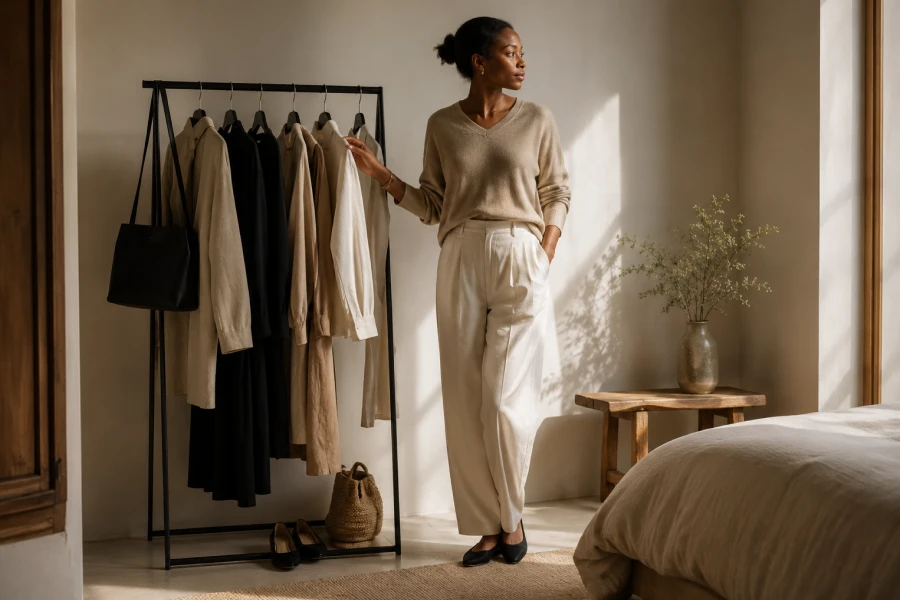
Minimalism becomes useful when it helps you dress with more clarity and less hesitation. A minimalist wardrobe for everyday life is not a uniform or a strict limit on how many pieces you own. It is a collection shaped around what you genuinely wear, enjoy, and need. The goal is to remove friction from getting dressed while keeping room for personality. That might mean fewer duplicate purchases, stronger outfit formulas, or better attention to fabric and fit. A well-edited closet can feel more expansive because every piece has a purpose. You spend less time sorting through almost-right options. You also learn to recognize what truly supports your routine. This creates a wardrobe that feels calm without feeling restrictive. The real benefit is not emptiness; it is ease.
Clutter creates more than visual noise; it also creates decision fatigue. When every shelf holds pieces you rarely wear, it becomes harder to see your strongest options. Editing your closet gives familiar clothes a chance to become visible again. Start by identifying the wardrobe essentials that already support your real life. These may include dependable trousers, favorite knitwear, shirts that always fit well, and shoes you can wear comfortably for hours. Notice what these pieces have in common. Perhaps they share a color palette, relaxed structure, or certain level of polish. Those patterns reveal the foundation of your personal style. A simpler wardrobe becomes easier to build when you begin with evidence rather than aspiration. The pieces you repeatedly choose are already telling you what belongs.
A successful edit requires an honest view of your current habits. Keep pieces that support the person you are now, not only the person you imagine becoming. Consider where you spend time, how you move through your day, and what makes you feel most confident. A personal style audit can help reveal the gap between what you own and what you actually wear. Sort your favorites by function, color, fit, and emotional response. Then notice which items consistently remain untouched. Some may need tailoring, while others simply no longer fit your lifestyle. This process is not about judging past purchases. It is about making future choices with better information. Once your closet reflects your routine, getting dressed feels more natural. Your wardrobe begins working with you instead of asking you to perform for it.
New purchases often feel necessary when existing pieces have not been fully explored. Before adding anything, challenge yourself to create several outfits from what you already own. Combine familiar staples in different proportions or pair tailored pieces with softer ones. You may discover that a forgotten jacket works beautifully with your favorite denim. You may also identify a real gap that deserves a thoughtful solution. Developing mix-and-match outfits helps you see your wardrobe as a system rather than a series of separate items. Each piece should create several possibilities, not one predetermined look. This approach encourages creativity while reducing waste. It also makes everyday dressing feel less repetitive. Once you understand your best combinations, shopping becomes easier because you know exactly what will integrate well. That is a smarter path to variety than constant accumulation.
Minimalism should never erase the details that make you feel like yourself. A streamlined closet can still include strong color, interesting texture, jewelry, prints, or a memorable coat. The important thing is choosing expressive pieces that work with your overall direction. One distinctive item can create multiple fresh outfits when the foundation around it is clear. Consider your favorite silhouettes and the details that make you feel most confident. Perhaps you enjoy crisp collars, sculptural bags, relaxed linen, or tailored trousers. Let those preferences shape your edit. Personal style becomes stronger when every piece reinforces a recognizable point of view. You do not need more options to create more expression. You need options that relate to one another with intention. That is what makes a minimalist closet feel rich rather than repetitive.
A thoughtful closet encourages you to care for the clothing you already own. When every piece has value, maintenance becomes easier to prioritize. You are more likely to repair a loose button, clean shoes properly, or store knitwear with care. This attention extends the life of your favorites and improves how they look. It also slows the cycle of replacing pieces that still have plenty to offer. A smaller, clearer wardrobe makes it easier to notice what needs attention. You can see which items are worn often and which categories are missing. This creates better planning, better spending, and fewer rushed purchases. Over time, the closet becomes more stable because you understand it. That stability brings a sense of calm to everyday style. It also gives you more confidence in the choices you make.
Your wardrobe should support the life you live rather than demand constant effort. The best system is one you can maintain through changing schedules, seasons, and moods. Give yourself flexibility to evolve without abandoning the pieces that already serve you well. A minimalist approach works when it makes getting dressed feel lighter, not more controlled. Keep experimenting with outfit combinations and notice what you wear repeatedly. Those preferences are valuable because they come from real experience. Allow your closet to become more refined gradually. You do not need a dramatic purge or a perfect list to begin. Small, consistent edits often create the most lasting change. When your wardrobe feels easy to use, it has already succeeded.




Leave a comment